|
 Note: LazerWorks now has a short kit for the
½A Skylane. Note: LazerWorks now has a short kit for the
½A Skylane.
Plans can be purchased from Carl
Goldberg.
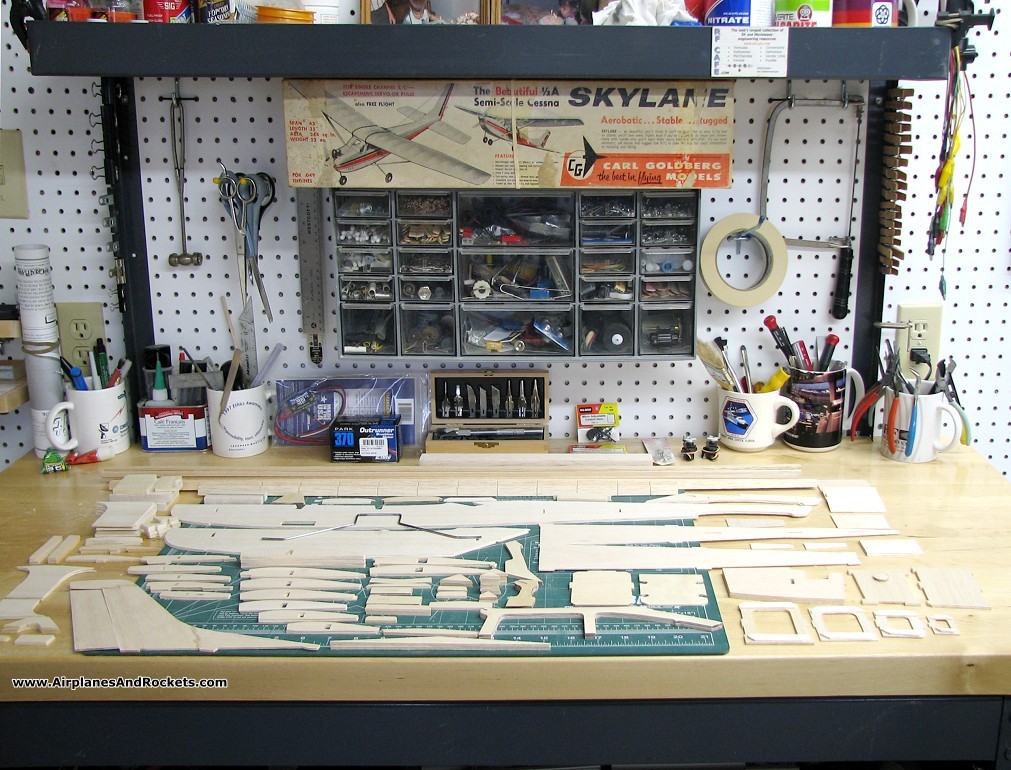
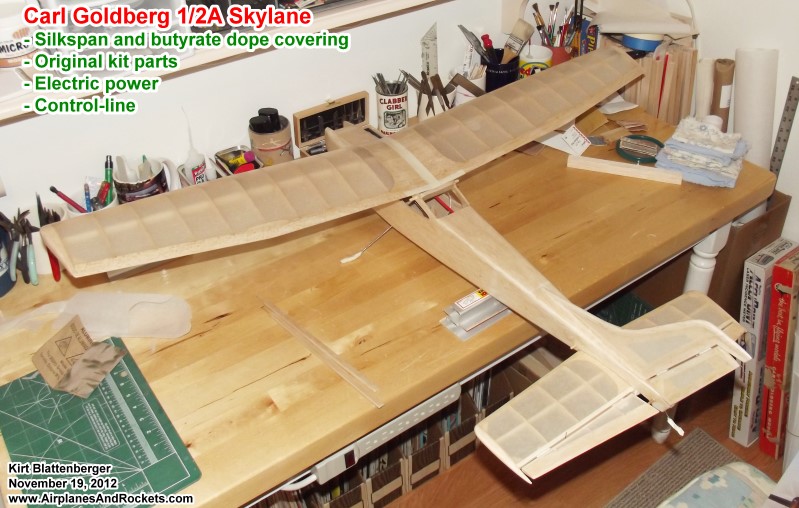
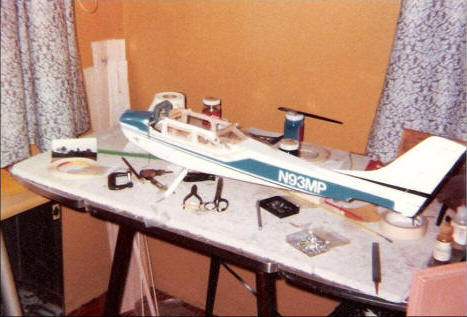
OK, I've decided to build another 1/2A Skylane. This time it will be electric. As with the one described below that was
powered with a Norvel .061 nitro fuel engine, this one will be built by creating a kit of parts derived from tracing around
the original kit parts. Surprisingly, especially for the era, the balsa and plywood used in the original kit are very high
quality and the density of the wood is excellent. Of course, the nice thing about cutting parts from scratch is that you
get to hand-select all the wood.

carl Goldberg 1/2A Skylane plane

Parts cut out.

3-channel R/C version of 1/2A Skylane
A copy of the original plans was obtained off of eBay before I actually bought a kit off of eBay as well. The guy presented
the plans as if they were the originals, but turned out to be a cheap copy. The size increased by about 1% or so during
the copying, so the parts aren't quite a match to the plans. They do match original plans that I got with the kit,
though.
My intention is to replicate the kit pretty much exactly per the original, but I will need to do some modifications to
accommodate the brushless motor setup. It will be 3-channel, with throttle, elevator, and rudder. The original plans shows
installation for both a servo (very large) and an escapement. If all goes well, I hope to actually use a nano servo to drive
a torque rod to control the rudder, per the original. I'll provide photos once it has been done. Unlike the escapement control
that provides center and full throw left or right, this will be proportional.
On the .061-powered version, the elevators we separate and controlled by a split pushrod. This time, they will be jointed
and hinged along the same line so that a single pushrod can be used.
Here is a tip that makes cutting out the plywood parts much easier where inside curves are required. Use a Forstner bit
of proper radius to cut the radii, and then proceed with cutting everything else either with a jigsaw or band saw, and sand
to final size. Doing so virtually eliminates any tendency for the plywood layers to pull apart or chip off while cutting.
I was actually able to control the Forstner bit positions tightly enough (using a drill press) to not need to sand the inside
curves.
As a kid back in the 1960s, I built two Carl Goldberg 1/2A Skylane models. They were intended for a single-channel escapement
system, but I never did accumulate enough money for the radio, so they ended up as free flight planes. Both were powered
with Cox Baby Bee .049 engines. By today's standards, the kits were very difficult to build - lots of interlocking parts
and poor die cutting compounded the problem. I remember tying a string to the propeller and dragging it behind my bicycle,
carefully governing the speed to get it to the point where it would just begin to become airborne, then backing off.
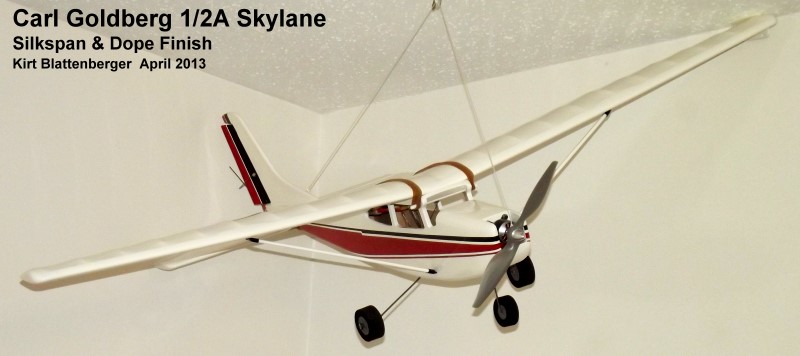
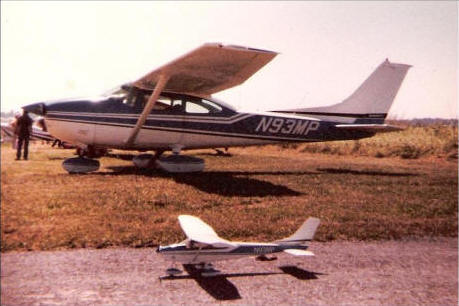
 The Skylane in the photos was built from parts traced from a kit I purchased
on e-Bay a few years back. Rather than making the fuselage sides out of three or four pieces, it was made of a single sheet
with appropriate doublers. Other than that kind of improvement, everything was built pretty much per the original. I made
the mistake of substituting a relatively heavy spruce wing spar for the normal balsa one. The Skylane in the photos was built from parts traced from a kit I purchased
on e-Bay a few years back. Rather than making the fuselage sides out of three or four pieces, it was made of a single sheet
with appropriate doublers. Other than that kind of improvement, everything was built pretty much per the original. I made
the mistake of substituting a relatively heavy spruce wing spar for the normal balsa one.
A 2-piece elevator was necessary to keep the scale appearance, since the trailing edge of the horizontal stabilizer tapers
forward on both sides; that was a real pain because it required a split pushrod arrangement and contributed to a tail-heavy
end result. Admittedly, I could have done a better job with both the elevator and the rudder pushrods, so maybe the next
time around a better system will prevail. Even with three Futaba micro servos and a 300 mAh battery pack, the model ended
up very heavy - and flew like it. The Norvel .061 was also way too much power for it, but better more than enough power
than not enough is my motto. The 1/2A Skylane was stable in the air, but landed very fast because of the relatively high
wing loading and stall speed. I don't have the flying weight number handy, but it was around 6 ounces over the max recommended
by Carl Goldberg, partly due to 2.5 ounces of lead necessary in the nose to balance it. I still have the kit of parts and
the plan, so some day I'll build another and use a really lightweight radio system and be more choosy with balsa/plywood
selection.
The AMA Plans Service offers a full-size version of plans at a very reasonable cost. They will scale the plans any size
for you.
https://www.modelaircraft.org/plans.aspx
e-Skylane
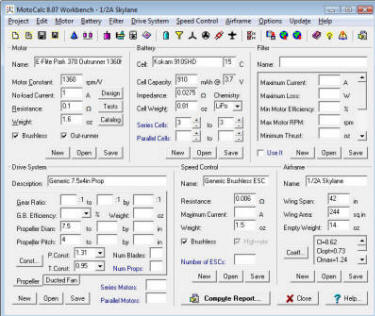
I am now working (very slowly) on an electric-powered Carl Goldberg 1/2A Skylane. MotoCalc software was used to determine
which motor/battery combination would be necessary in order to achieve the desired performance. Here is a snapshot of the
input parameter screen and of the output performance prediction screen. The data provided for my electric-powered of the
Great Planes Spirit (e-Spirit) worked out extremely well, so I trust this prediction.

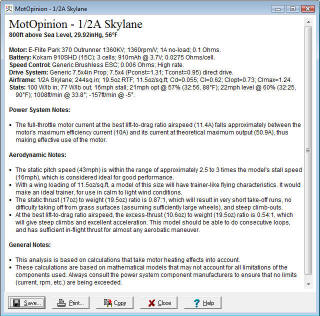
MotoCalc Parameter Setup Screen and MotoCalc Output Screen
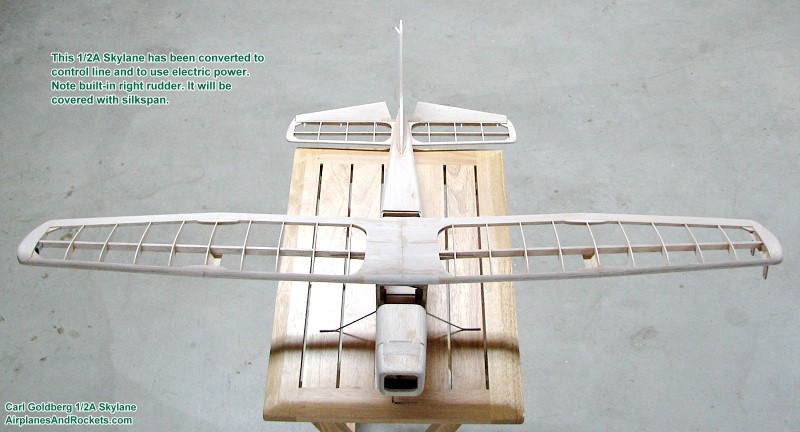
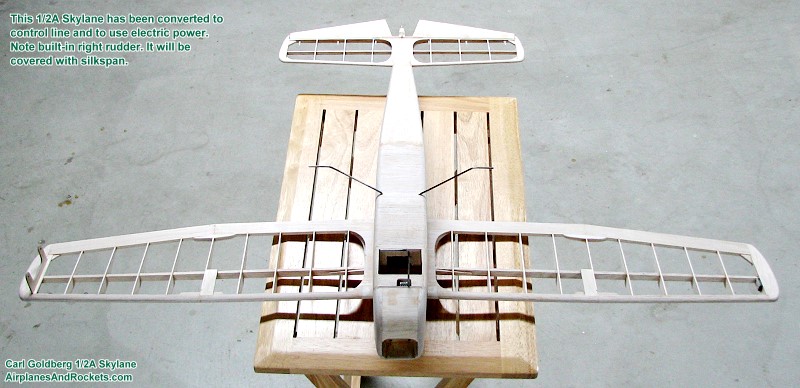
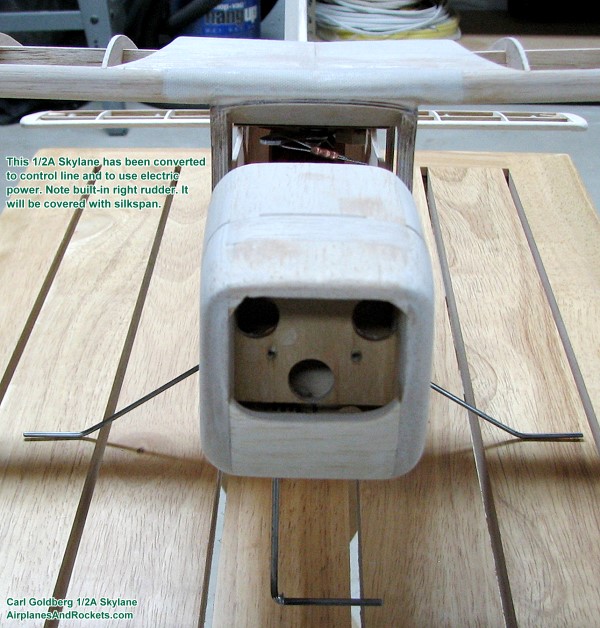
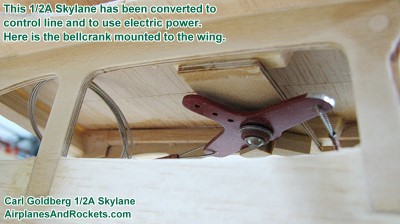
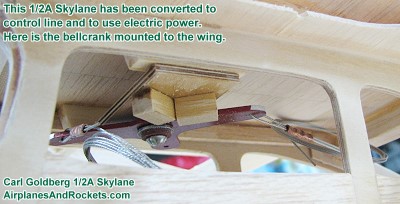
Here are some construction photos of the control line e-Skylane
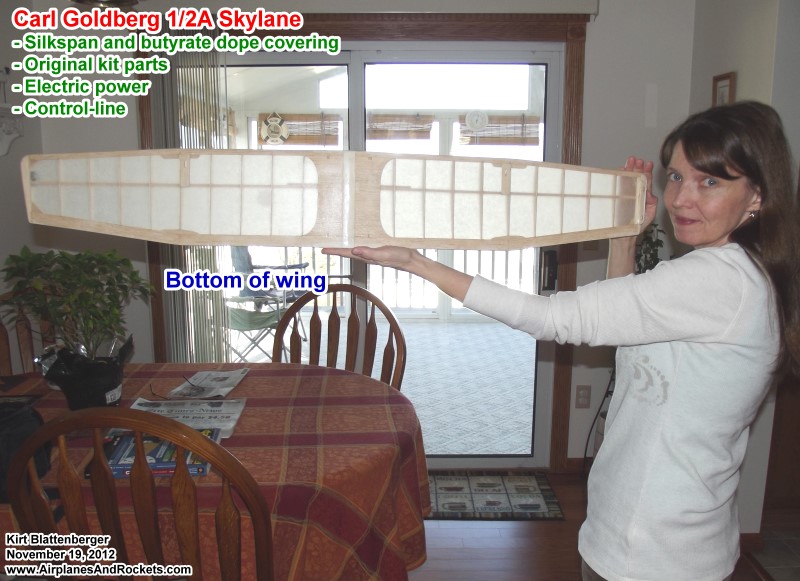
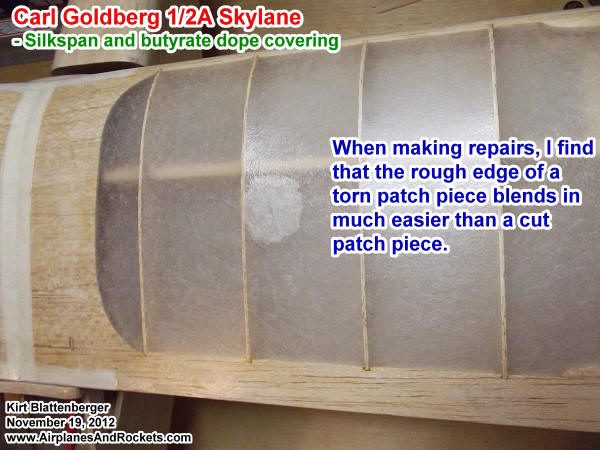
 Melanie Holding Wing Covered w/Silkspan

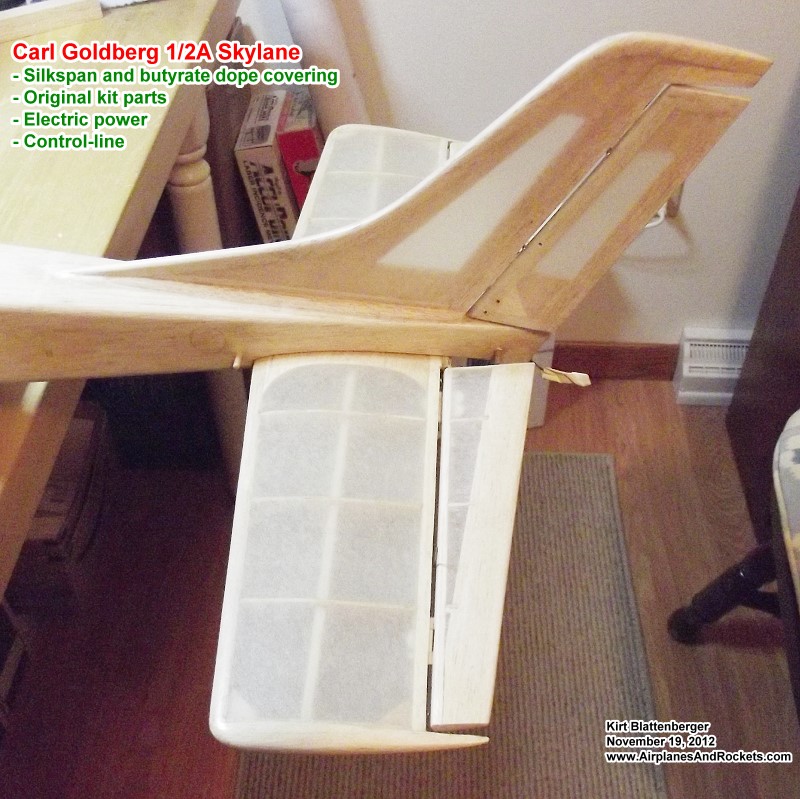
Tail Surfaces Covered w/Silkspan

Top Framework (front)

Top Framework (rear)

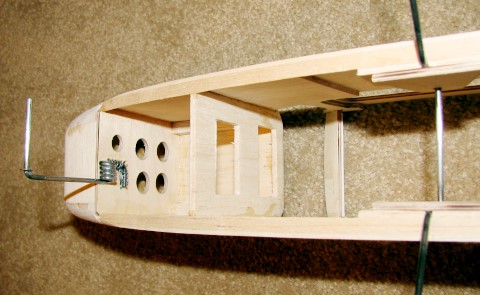
Nose Gear

Main Landing Gear Mounting

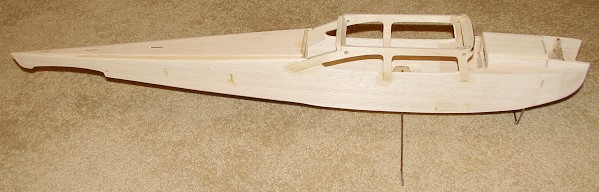
Bottom Framework (front)

Bottom Framework (rear)

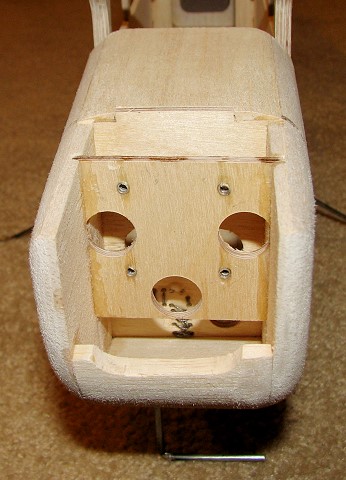
Front View


Bellcrank Mount
|

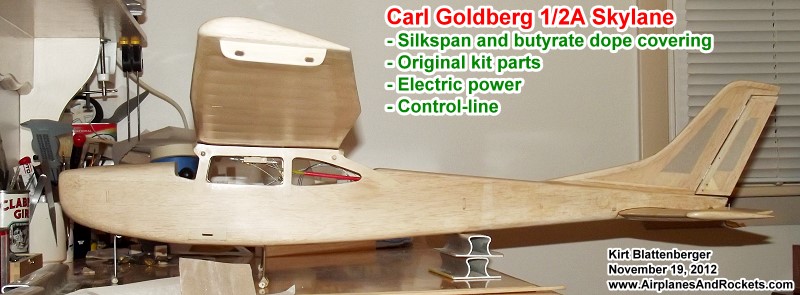
Airframe Covered w/Silkspan

Wing Covered w/Silkspan

Fuselage Covers wSilkspan

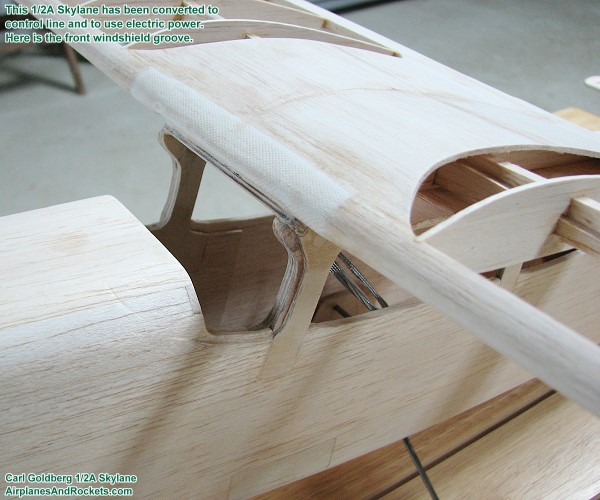
Wing / Cabin Interface (rear)

Wing / Cabin Interface (front)

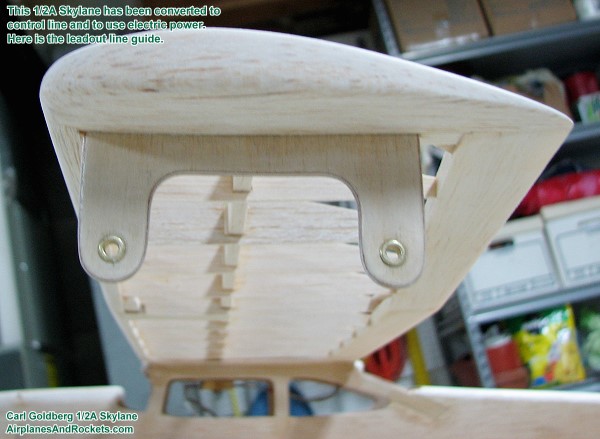
Wing Line Lead-Out Guide


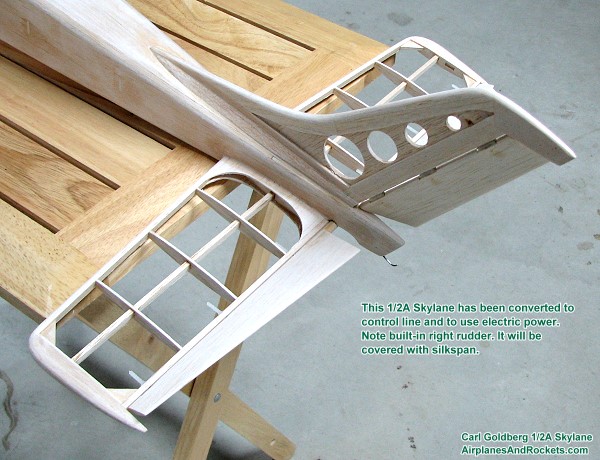
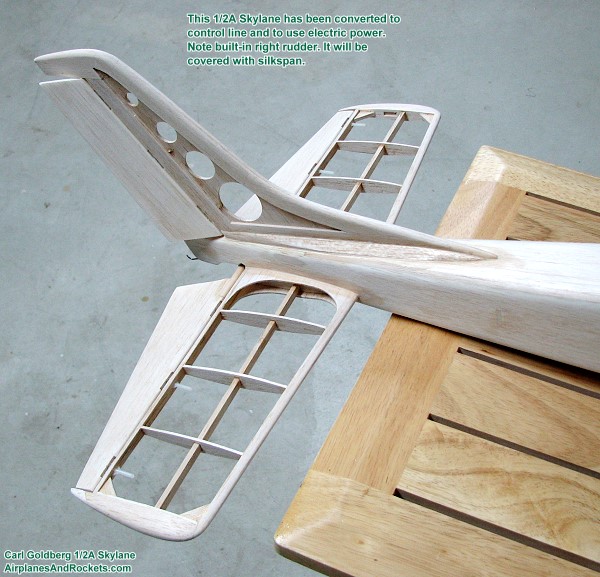
Empennage Frame

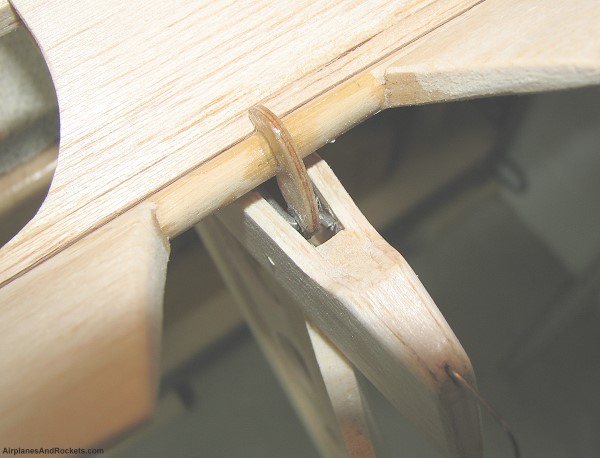
Elevator Control Horn


|
Many people on the model airplane forums have been asking for full-size rib
patterns for the horizontal stabilizer and the wings for the 1/2A Skylane. These images have a ruler at the bottom to allow
you to scale them to full-size and print. |
 Horizontal
Stabilizer Ribs |
 Wing Ribs |
|
Good News! Carl Goldberg Products now sells plans for both the
1/2A Skylane and the
Skylane 62.
|
|

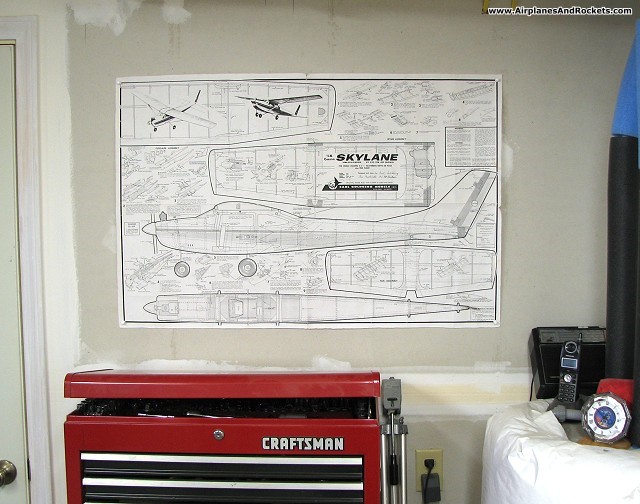
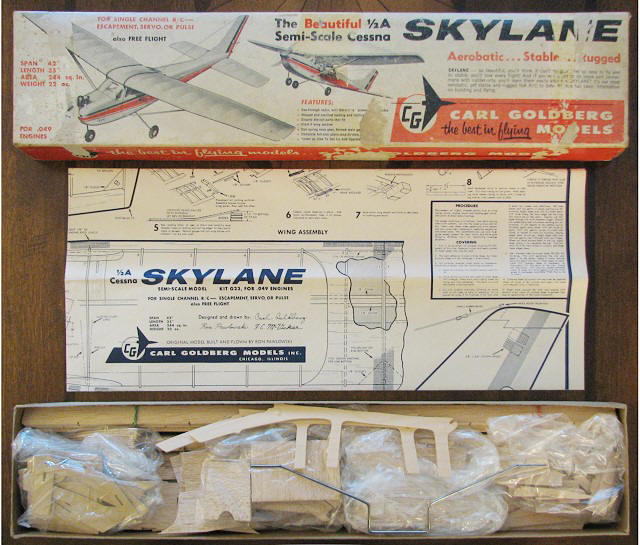
This must be a rare pair - the Carl Goldberg Skylane 62 and the 1/2A Skylane kits. Here is my personal
1/2A Skylane kit. The plans are shown below, and at some point in the future, I'll post photos of all the parts.

Wingspan: 42" | Wing Area: 244 | Weight: 22 oz.
 

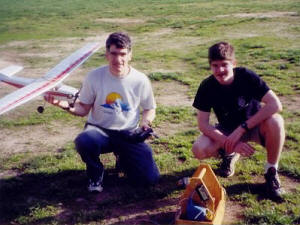
AirplanesAndRockets visitor Kim Stricker has been kind enough to send photos of
his 1/2A Skylane that he built as a teenager. The paint scheme is modeled after a Missouri Highway Patrol aircraft - quite
a nice job!


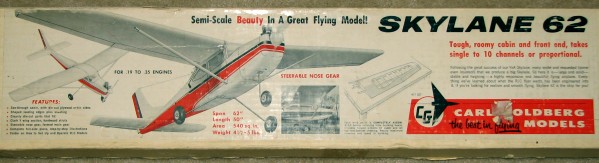
Here is an advertisement from the January 1970 issue of the AMA's American Aircraft Modeler magazine
This is the Skylane 62 kit that I purchased off of eBay a while back. It has since been sold.

Note: The Academy of Model Aeronautics (AMA) sells the Skylane 62 plans:
https://www.modelaircraft.org/files/plans/pdfs/s-plans.pdf


Carl Goldberg Skylane Kits Sold on eBay
Here are a couple recent eBay auction ending prices - $292, $305, and $265 for this exact same kit. It is rare to find
one for sale.

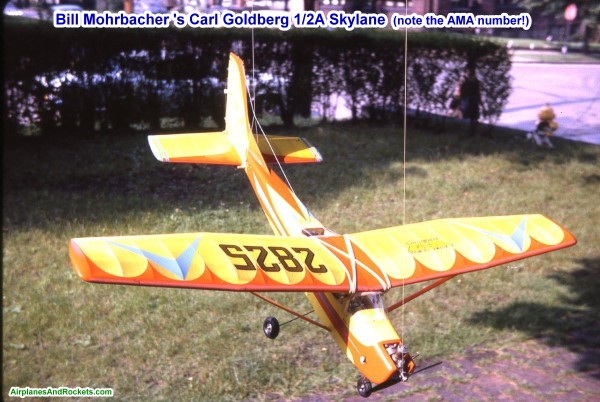
 Website visitor Bill Mohrbacher
sent these photos of his Carl Goldberg 1/2A Skylane that he built many moons ago. His Skylane looked better than any of
mine even after crashing! Read his note.
|
Note from Bill Mohrbacher:
(April 2012)
"Today I saw your CG 1/2A Skylane post. Back in 1964/65 I built one. I was covered with yellow silk and painted with
Sig dope. I love transparent finishes. The framework fascinates me, I love to look through it when I am flying overhead,
and I am also quite vain and proud of my work.
I always found CG kits to be well engineered. Parts were ACCURATELY drawn and produced (not like Sterling and Berkeley).
Material selection was excellent. There was a lot of work in the assembly and you had better know how to contour and block
sand, but the final results were spectacular. And the planes were always excellent fliers. Carl Goldberg's experience sure
showed in all of them!
I don't know what mine weighed, but it was probably on the light side. Power was a 1964 Fox .049, Citizenship superhet
relayless rcv, Mule MK II xmitter, Babcock MK II compound escapement (can't use esc abbreviation anymore for this vintage
mechanical wonder), and 2 pencell battery PS. I didn't use the kick up, just rudder and no throttle. I could do loops, Immelmans,
Cuban 8s, and barrel rolls; typical RO maneuvers.
Then I got fancy. I installed a MaX 10 RC engine, OS single channel throttle servo and SC rudder servo, Controlaire SH
100 Superhet relay rcv, and 2 more batteries, 4 total. All was well until the first loop and then the balsa wing spar failed.
I have always wanted to build another; someday!"
|